
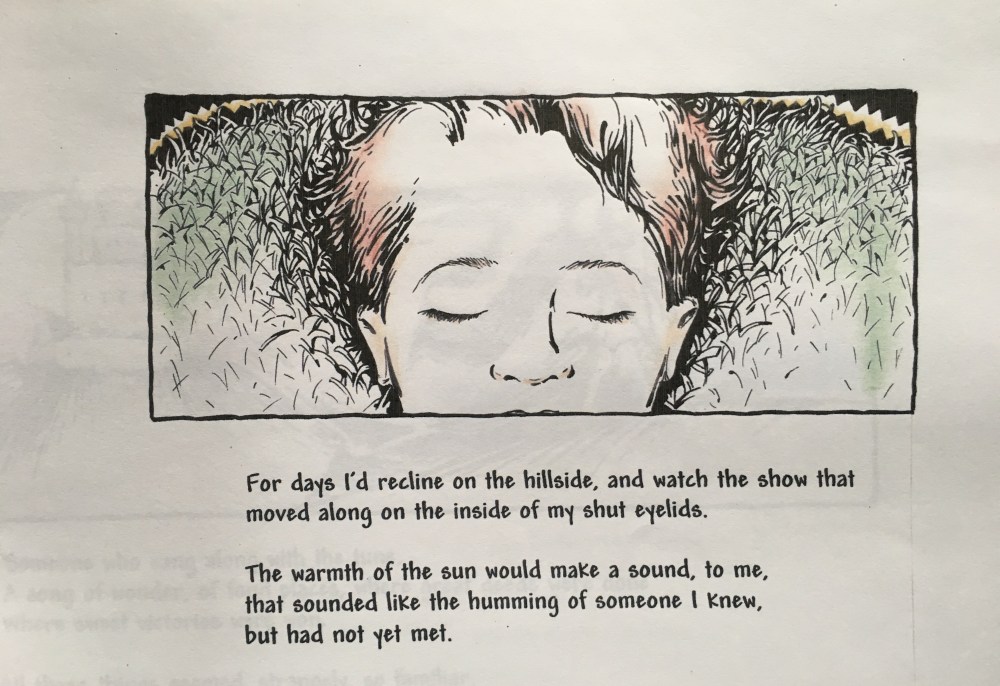
From The Realm of Possibility (1998). Artwork and text copyright Danny Grosso.
From The Realm of Possibility (1998). Artwork and text copyright Danny Grosso.

Beautiful one, your sadness will not fade with distance, nor your burdens ease with age. The darkness that you grope in now defines you. You have attuned yourself to the lack of lightness, and of light, and neither sunlight nor limelight can change you now.
You may only see in neon.
Your tears have rut your beautiful face, distressed your leather, quickened your thirst. You come out in darkness, parched and hungry, yet seeking no one and no thing. You wish to turn no stone, meet no eye, live as a gas, drifting, untouching, unredeemed.
You may only be in neon.
-Danny Grosso

Jumpin’, just jumpin’, or maybe not just – and tapping, and sliding, and spinning, whatever the move, those shoes made it look Astaire clean. The specs, borrowed at first from the look of spats falling from Edwardian trouser legs, then from summer shoes after the Great War, were hand-painted at first, at least his were. Hard to find anything but brown clodhoppers in 1979. When he found his first real pair of spectators in a store it was a revelation. He wore them everywhere, even in the winter, when the salt and the wet ate away at the soles. Stuck cardboard in them until he could get to Frankie the shoemaker for a ten dollar sole job. He built entire wardrobes around his specs, found ways to wear them with summer whites, ordered a second pair for a backup as soon as he had the extra money. Around that time, in the alley under the El track, the shoe graffiti appeared. Everyone knew who did it.
-Danny Grosso

Continuing the expeditions of Jeff MacNelly, James Kilpatrick, and Eugene McCarthy, with apologies.
The Radical
The fast moving Radical keeps to the perimeters of the bestiary, leaving a trail of newspaper clippings and insects blowing from its ratty mane. Radicals cling to one side of the edge, or the opposite other, depending on political affiliation, but never travel to the center of the bestiary, except in retirement from public life when they take positions with lobbying firms on K Street. Some time thereafter, in their dotage, Radicals pale and soften and recede into an amoebic final life stage that ends in an quiet evaporation and subsequent assimilation into the beltway atmosphere. During the prime of life, however, the Radical is anything but unnoticed, it is reddened and vituperative, flashy and coarse, a motorcycle in an echo chamber, constantly striving to amplify its resonance. Proceed with caution, but not fear, while interacting with this creature. Often the radical’s ideas are of interest, even if the creature itself is repulsive.
–Danny Grosso
 From Chicago Gothic (2007). Artwork and text copyright Danny Grosso.
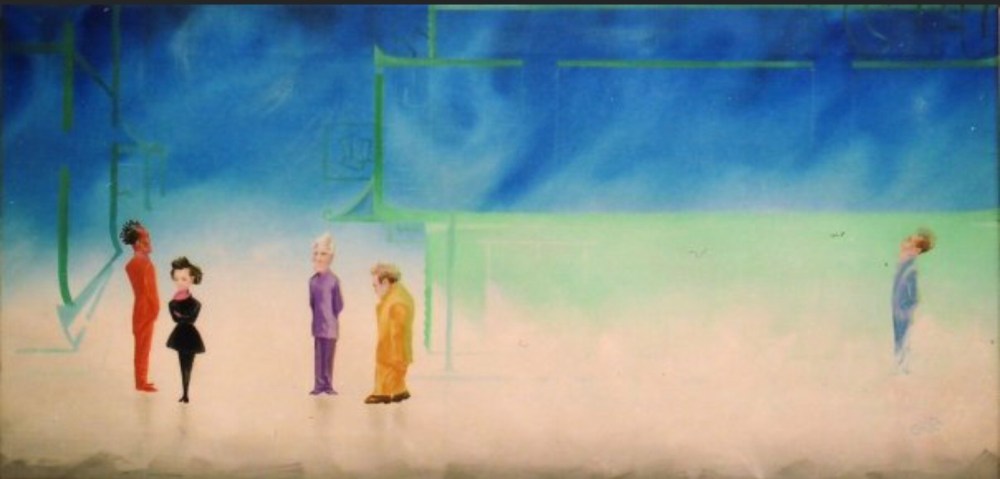
Even the construction barriers were built to resemble pagodas down there. The growing Asian population before the closing of the borders had changed the aesthetic priorities of the city and its partner developers. It became a tradition to appropriate artistic culture for banal commercial purposes, and, even now, as the disinfected structures are rehabilitated for the appropriate uses of the new age, the barriers and scaffolds have a Kyoto flavor. Like the rest of the city, most everything else has changed, especially the density. As residents were urged to live separately, the streets were cleared for foot traffic, allowing for a sense of openness that people once had to seek out in a desert. Groups of four can linger on a corner, separated but together, without fear of obstructing the once great army of pedestrians on their way to fast food lunches or commuter trains.
There is a certain charm to an empty city. The long afternoon shadows and the gravity of history comport with the echo of noises past; music from a time when the percussion of an unbridled society propelled all those poor souls toward an unexpected future.
-Danny Grosso
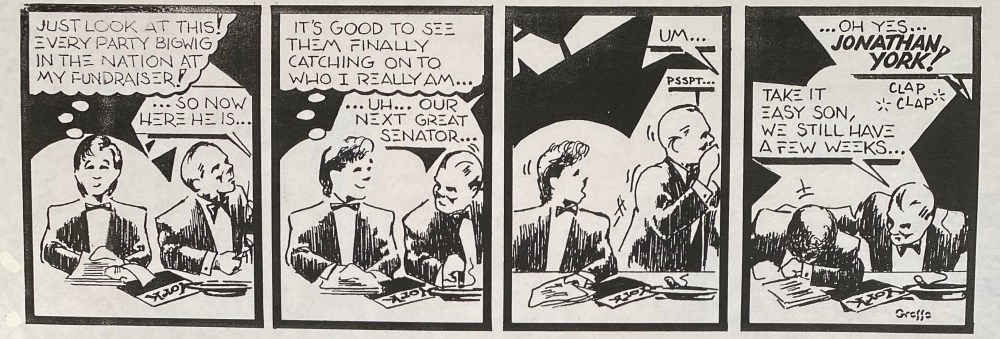
The Traveler first appeared in The Loyola Phoenix under the title D.C.. Many of the original strips were damaged in the layout and printing process, so the author reworked them in 1990-91.
–Danny Grosso
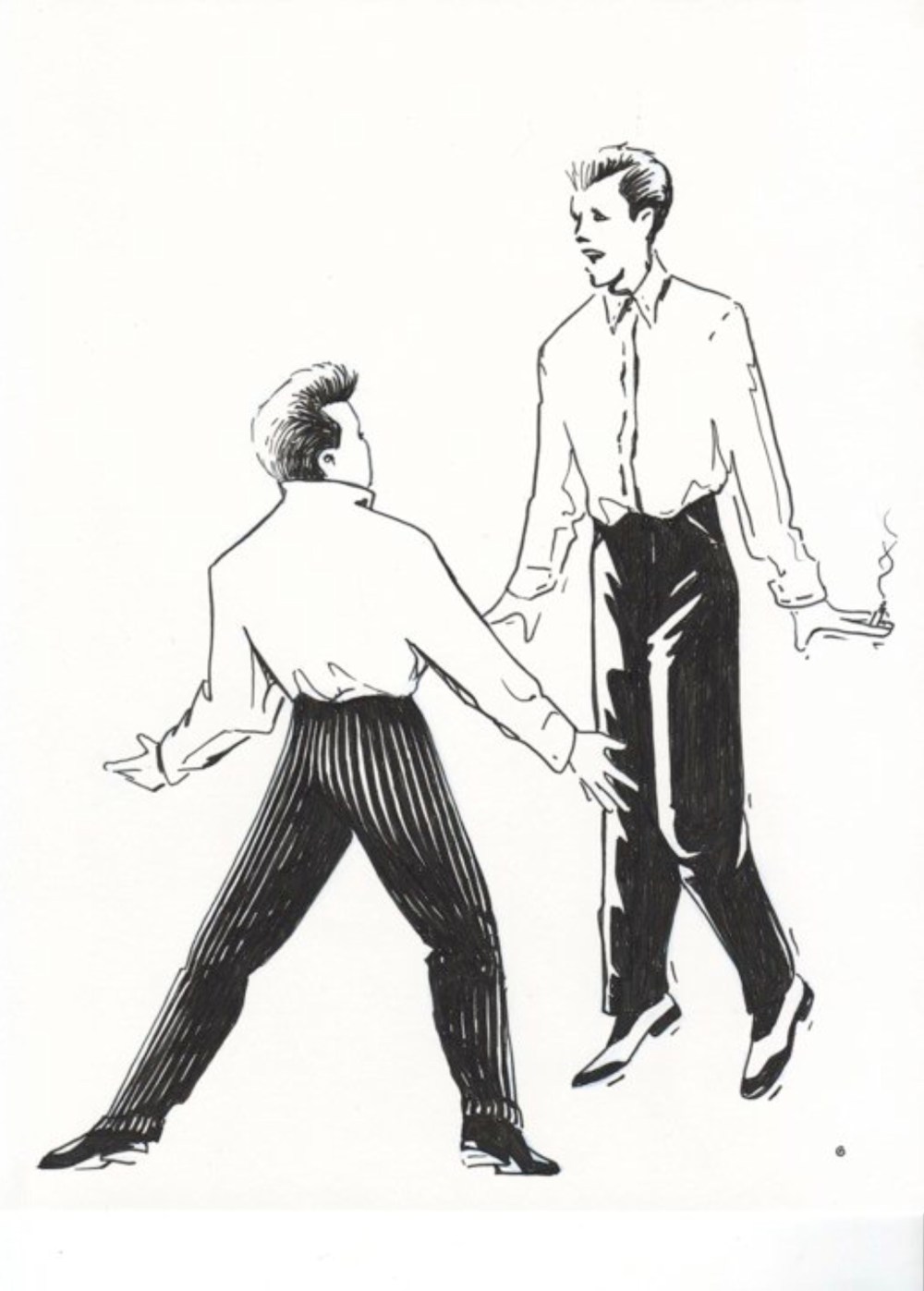
The place thumped as they made their way through the gauntlet guard of bouncers, coat check girls, and waitresses in the small foyer. No cover to pay – they were regulars. No coats to check- they had parked close enough to leave their coats in the car and run to the door in the cold. No drinks yet – they hadn’t worked up a thirst.
Johnny Angel was pulled aside by one of the older guys whose dad was an alderman. Angel’s eyes narrowed as the guy asked if he and Duke could paint the ward office for him tomorrow, cash job, off the books. Angel was hearing this inquiry in one ear, and a song he really liked in the other. “You gonna be here for a while?” he yelled to the alder-son. “I’ll be back in a bit…” he followed up without waiting for an answer. He was backing onto the dance floor and as he hit the linoleum he spun into the middle of a foursome of girls, regulars. “Just in time!” one of them, a blonde, screamed over the music, which was building under their feet. It as a heavy bass riff, and the soles of Angel’s feet felt like rubber. the effect was catching, he looked over his shoulder and saw the Duke bouncing over to him like Sid Vicious, mid-pogo. Angel’s muscles were loosening now, and the first beads of sweat sparkled his brow. the DJ was looking at him, and Angel held the DJ’s eyes as well while the latter reached for the volume knob. Angel was bouncing in rhythm with an ocean’s wave of sound, already ceding his body to the music. Eyes still on each other, the two waited for the right moment, then Angel nodded.
The knob turned, and the tuned became impossibly louder. The joyous screams on the dance floor went seen but not heard, as the music welled up further and seemed to crash through the bones of those lucky enough to be on the floor in that place at that moment in time.
Angel’s and the DJ’s eyes had not left each other. The only change in the telekinetic dynamic was that both parties were now smiling widely.
-Danny Grosso

Near the lakefront you would see them trudging from the beach in summer, bottles and buckets in hand, using the alleys to avoid the sun’s further caress of sunburned shoulders. Lovers and sun worshipers, mothers cackling at unruly boys, fathers holding their daughters’ hands. Voices carry differently in alleys, they are the city’s accessible canyons, and the children loved to make their attempts at bouncing echoes. A strangeness in urbanity: yodeling in the long shadows of summer afternoons.
-Danny Grosso
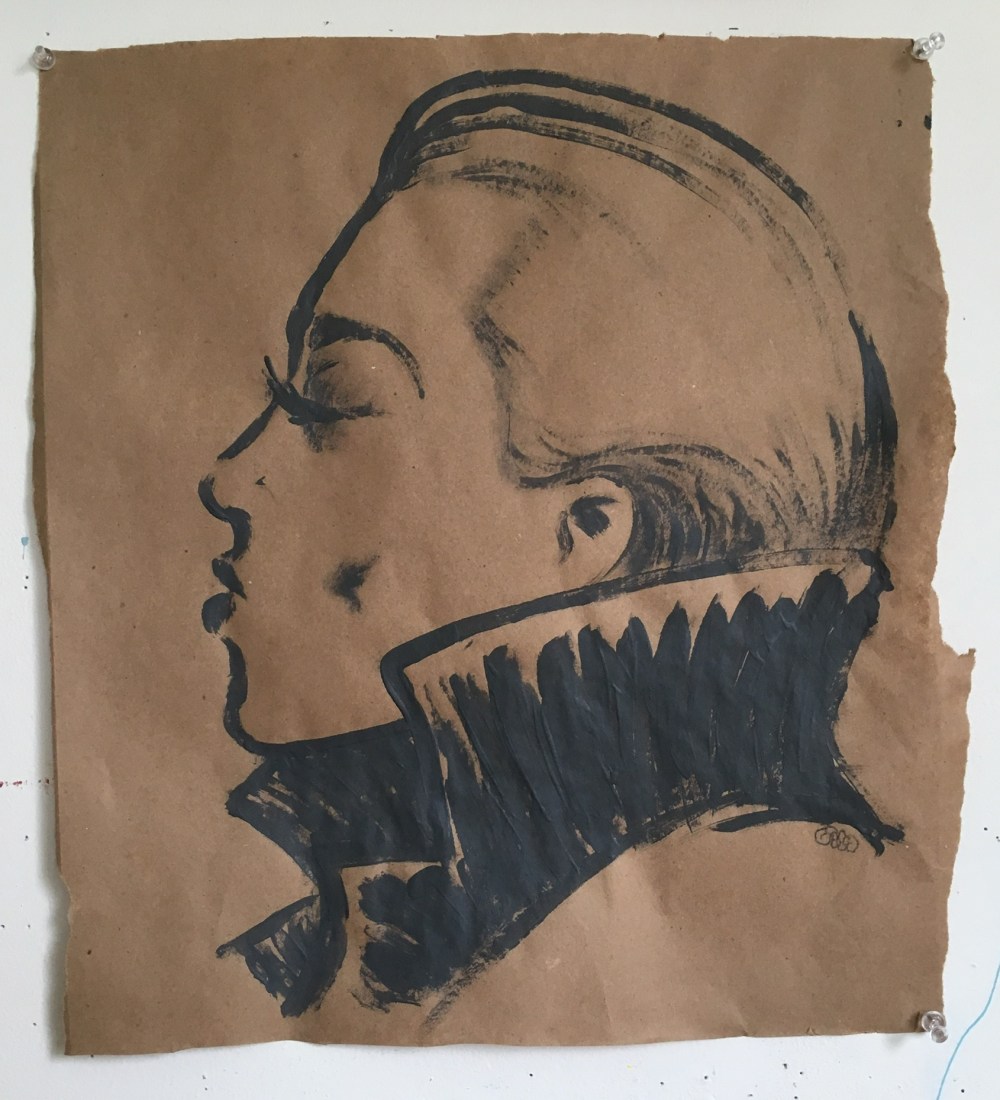
Snow was bright and glittery when the disco black lights hit her. An ice queen melting on the dance floor; sometimes she’d start partying too early in the day and wilt into your arms by midnight. Carrying her out of a club, you couldn’t help noticing how classically beautiful she was, like a figure on an ancient urn, straight nose, monochrome, unblemished. The hard nightlife hadn’t yet extracted its tax on her looks. Her demeanor was resilient as well, more fiercely bubbly than champagne, her laugh more a guffaw than a giggle.
She lasted a long time in that state, in that life, before the reckoning tumbled in with the winds of changing weather. All those heartbreaks; the overdoses and other episodes of violence, the AIDS and other scourges that she somehow escaped but sat sat witness to, like an empath, as was just – her whole life was that life, those people, her crowd, now falling apart, unlike her.
I saw her soul hollowing, and didn’t want to see her ever again. I dreaded the thought of time changing her. I remain with the memory of Snow, undrifted.
-Danny Grosso
 art is politics is art - Civil Discourse Matters