
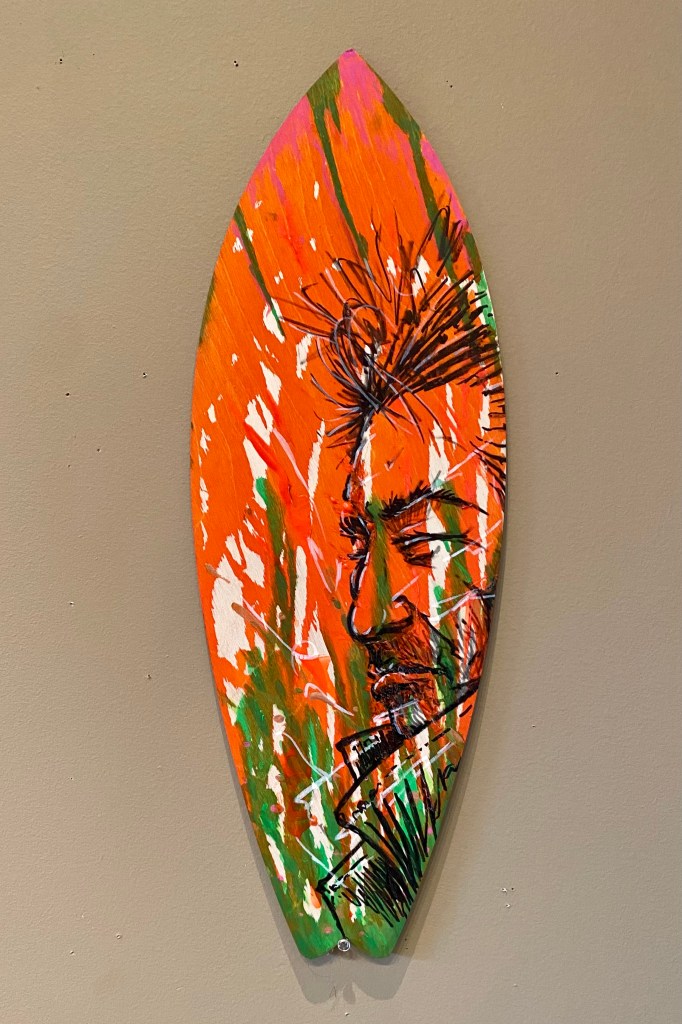
Excerpt: Blink. That’s what the light did, blink, the one that was supposed to remain steady. Also, it was red, not green, which meant that this alternate powered vehicle was not starting up again any time soon.
They called this the neon district, because a century and a half ago it had gas-illuminated tubes announcing the identities of shopkeepers. Now the lights were new energy, and blanketed the night streets with color. As he exited the vehicle, the pallor changed from violet to orange. The chip in his hand had signaled is favorite color. The mist in the air from the passing showers gave the district some extra humidity, and the cafeteria to his left seeped its cold moisture onto the window panes. It had been doing so for a while, it seemed – some of the sludge had greened.
He crept out slowly. Modern vehicles didn’t give out meekly, and this could be a trap. His reinforced collar was up to protect against a neck attack. and he had some jacket plates, but he knew how many vulnerable targets he presented on his person, especially to some of the new micro weaponry. At least he wouldn’t feel it – they say the jab was so small, the victims are unaware of the wounding.
Around him swam the iridescent babyflies and vapor gauzes, products of climate-driven rapid evolution. His grandfather, negotiating these same streets, would never have known these beings. He’d turned and scanned enough now, and stepping forward, he heard a crash. From his quick-held crouch, he saw that the noise was one the old man might have recognized. And old metal can crashing onto the pavement. Most of those receptacles had been long ago confiscated for upselling. He rose and stepped out, into the wet, into the steam, into the colored lights that went tangerine as he passed.
So much had changed since the old man’s days here, yet, like the geezer, he still carried a hand-held weapon. He grabbed it from its holster at the small of his back, and ducked into a dark alley. At the end of it was a door the color of a verdant meadow, like the natural spaces that once thrived outside of the city. It was lit by a single light cell, so that the base of the door was obscured, but he could make out a figure laying low on the landing. Now his weapon pulled him along. Making his way forward against a black painted wall, stepping and re-setting, one foot forward and then the other pulled even, he made a slow approach. Perhaps a bit too slow.
When he reached the doorway, the figure had disappeared, as often happened in this time of disappearances, holographic, and otherwise. He only hoped that the men that now appeared in the darkness behind him would have the same unsatisfactory visual experience.
–Danny Grosso
Excerpted from my story, Blink, from my book, Holograms and Long Tweeds.
My Amazon author’s page: amazon.com/author/dannygrosso
Instagram @artispolitics

