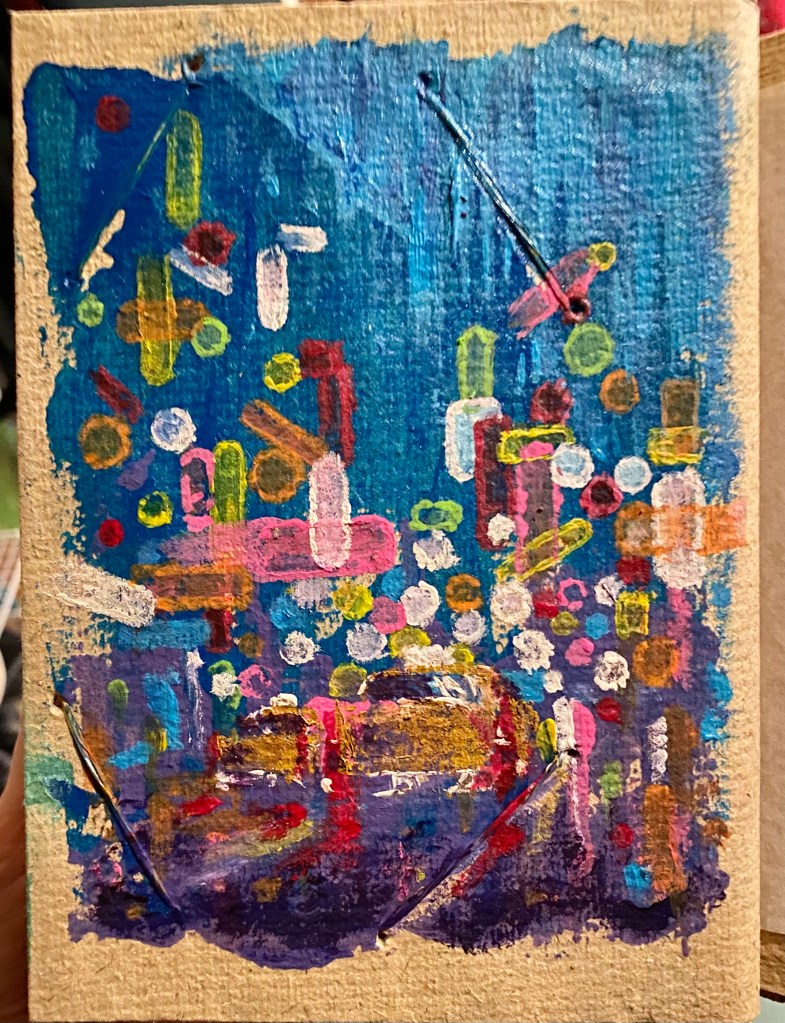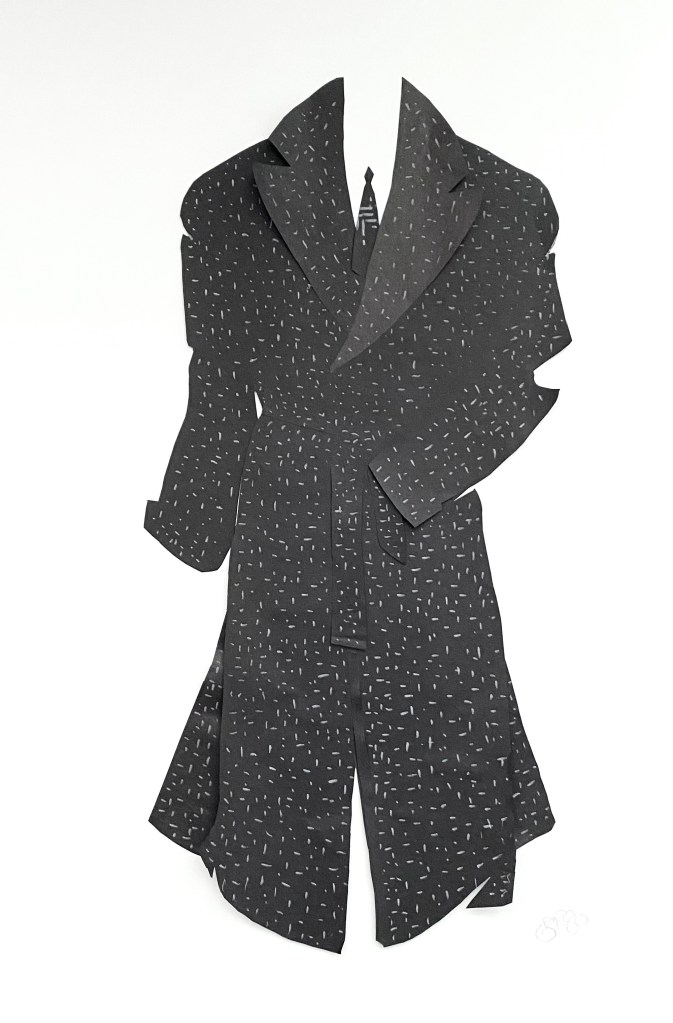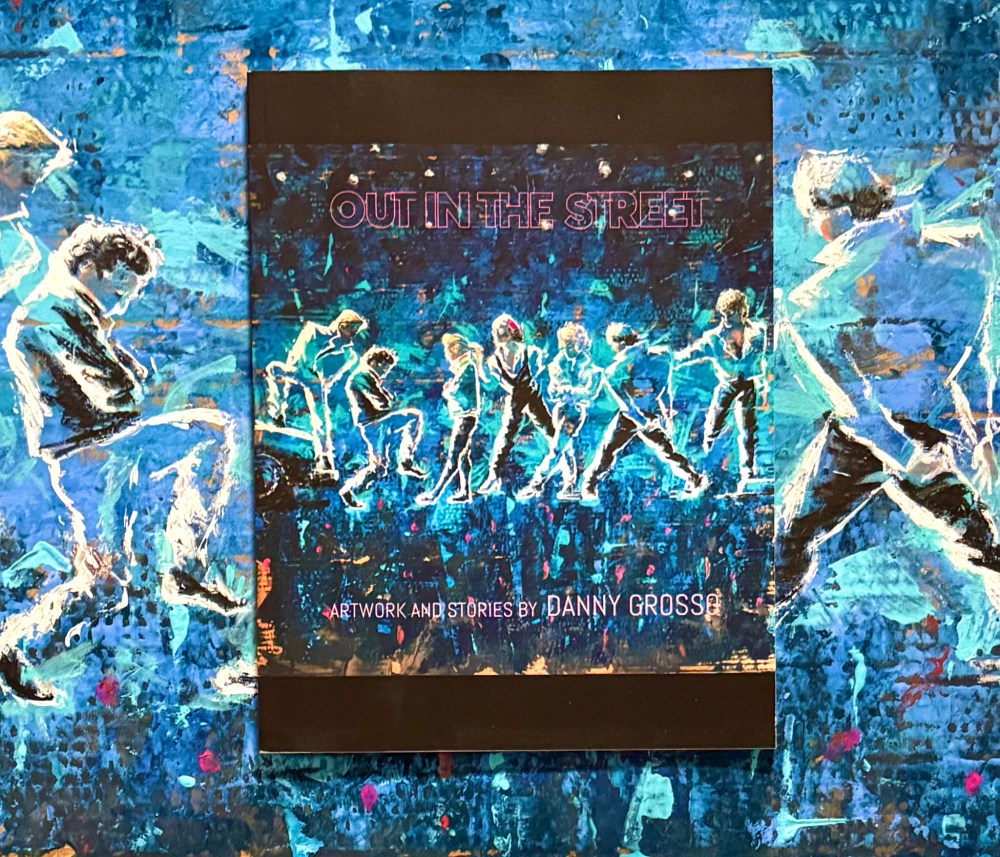
Cloture (2020). Acrylic and ink on paper. From my book, Another Political Bestiary, available at Amazon Books. Artwork and text copyright Danny Grosso.
Continuing the expeditions of Jeff MacNelly, James Kilpatrick, and Eugene McCarthy, with apologies.
The Cloture
Robed in a Byzantine frock, Book of Spells in hand, the Cloture haunts the aisles of legislative chambers and holds enormous power. The Cloture can, with a mere whispered incantation, rob the legislators of their reason for existence, the continuing dalliance and debate of matters on the floor. This blunt power is all the more hard for the elected to take because it emanates in short order from this soft spoken and opaque creature. The Cloture’s deed is devastatingly quick and lethal, and invariably leaves one side of a legislative body panicked, frightened, traumatized. A friend to the majority, mostly, the Cloture can be vexing as it sometimes switches sides in times of crises or need, proving that it has no ideology but its own mystery and power. By that infidelity, the cloture is at times the ultimate foe of elected officials who, left unable to speak on the matter at hand, are left to cry about it on the prime time opinion shows.
-Danny Grosso
Instagram @artispolitics
My Amazon author’s page: amazon.com/author/dannygrosso
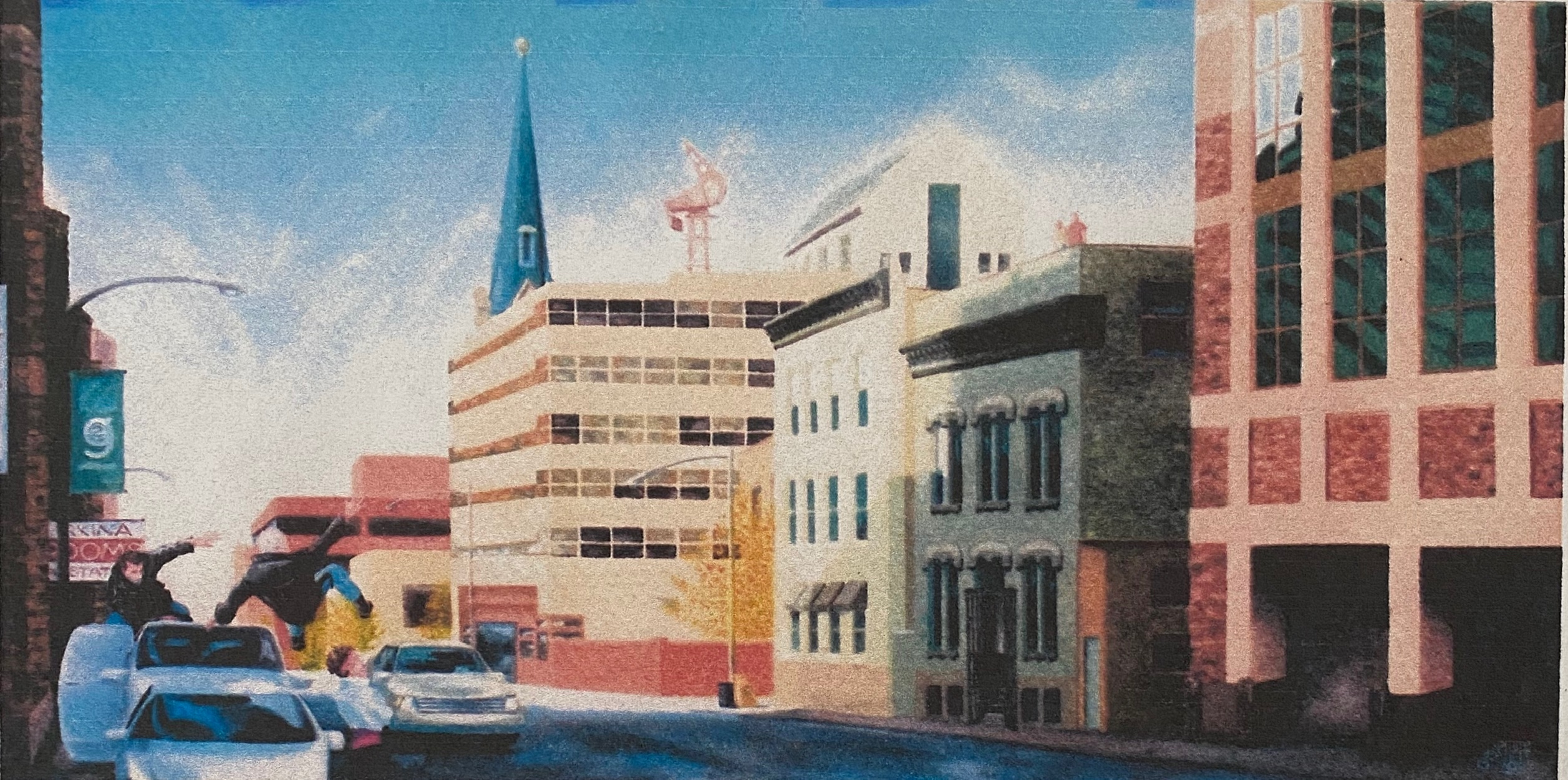
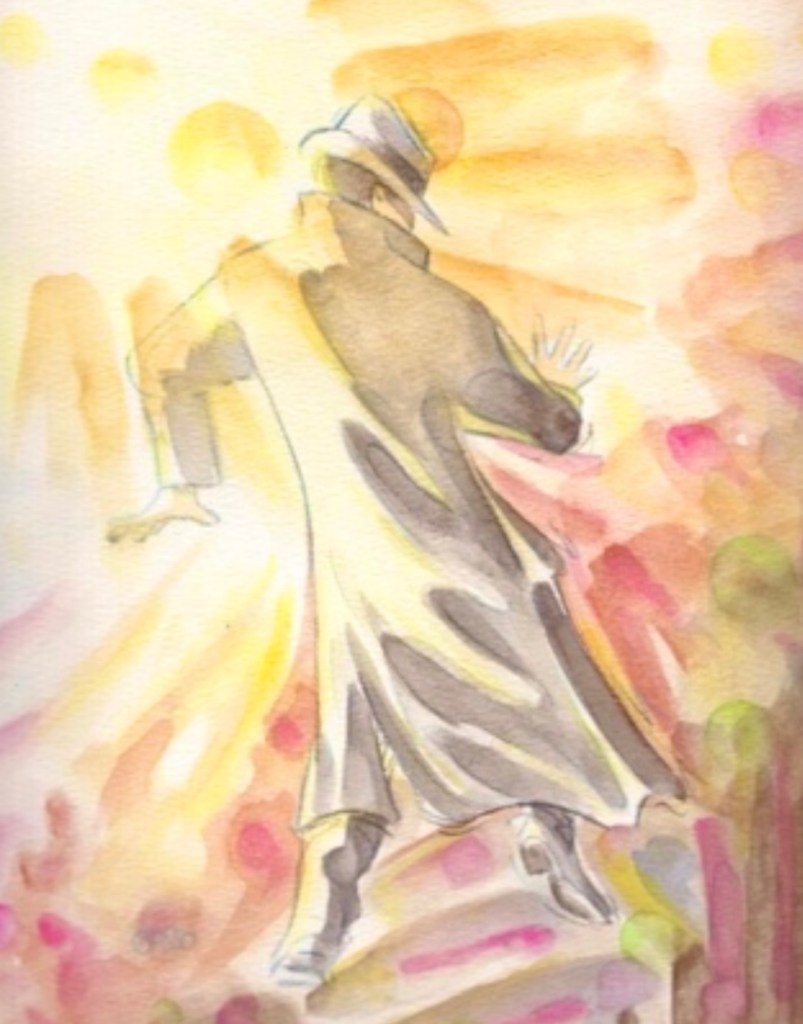
Glare (2012). Watercolor on paper. From my book, Opening Acts and Other Stories, available at Amazon Books.
Excerpt – Happens every year. That first sunny and warm day in February, that false spring, is the one that captivates enough to distract everyone from the reality that this thaw is fleeting. Office workers head to lunch in shirtsleeves.College boys run to class in shorts.Dapper men of ambiguous means, unwilling to disrobe, unbutton their topcoats as they make thier rounds.
Carlo turned from an alleyway onto the sidewalk.The sun coming from the west blinded him. This happens often when a city’s street grid lines up just so. But no one ever gets used to the several seconds of sightlessness and glare, all while moving with and against the flow of pedestrian traffic. Shoulders bounce off one another, folded umbrelas get caught in briefcase handles, packages get knocked to the pavement.Sunglesses might help, but Carlo won’t wear them because they hide his green eyes. Of ambiguous utility is the shield of the gloved hand, which just exposes the elbow, and a strangers head, to damage. Still, the sun is welcomed in winter by everyone, and some tempt fate by closing their eyes and tilting their heads up, as if to catch a quick walking tan.
Carlo had only taken a few steps from the alley, so he was still blind when he heard the POP!
It was a backfire, some old car, but Carlo was jumpy. He’d had threats all week from the family of his ex. Now he remembered how one of her brothers used to make a sound like that backfire in grade school, by stomping on a closed but empty carton of cafeteria milk.
Carlo had started up with her for the same reason he chased the others – blinded by beauty. She was a stunner. He disregarded the instant notion that the exit from this one might be a little sticky. In addition to her clinginess, he has been shilling for the legit side of a guy that was opposed to her family, and her brothers knew this. Could get ugly.
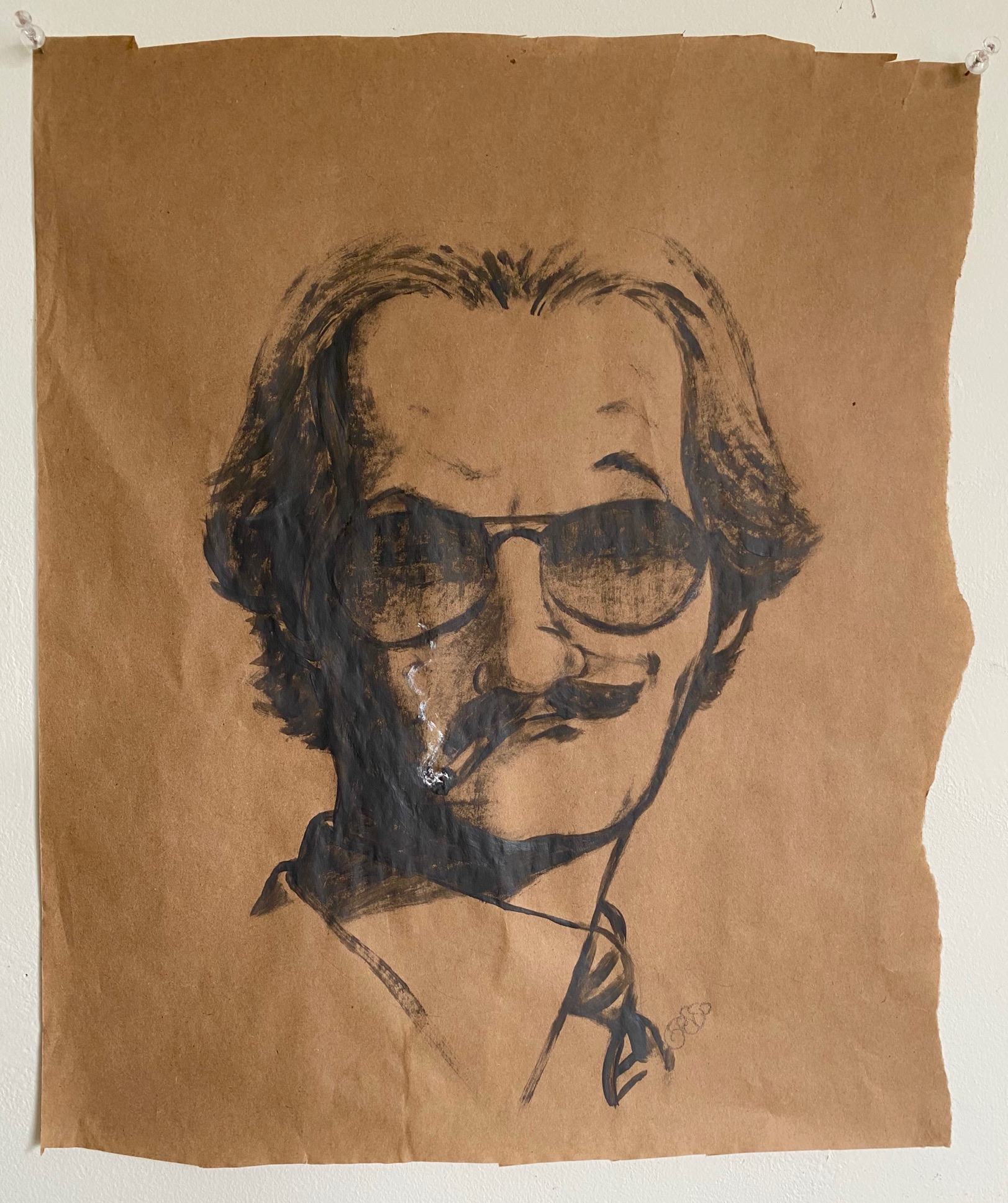
Hardie Boy- Mud People, No. 24 (2020). House paint mixed with mud, on paper. From my book, 37 Mud People, available at Amazon Books. Artwork and text copyright Danny Grosso.
The Hardie boy is waiting for me. It is 9:14 am and I am already late. The Hardie boy is waiting for me in a place he is sure will allow him to be the first to see me. Leaning against the wooden display case, he has an unobstructed view of the double front doors as I swing them both open and scurry into the foyer. He sort of slides, like a skinny snake, up to me, really up to me, his face a few inches from mine. “Um hmm!” he says, accenting the second syllable with vigor. I try to say “What!” but nothing comes out – my voice is hiding itself – I haven’t spoken since the night before, or rather a few hours before, when it was still dark, and I ran home from the clubs to change clothes.
He is staring at me, only for a second, so I will look at him – he needs me to look at him so he can complete the gag. I do look up, laboriously – I’m bloodshot from the smoke, the drink, the lack of sleep. His crows’ feet spread into his temples. “Close your eyes or you’ll bleed to death,” he says, and then turns on his heel to go fetch me some coffee.
His time on a Mekong River gunboat made him hate tardiness. His time with me made him more accepting of those whose lives sometimes overwhelmed the need for punctuality. He was regimented about everything but me, sort of, but then, he seemed to accept it as his duty to make me laugh, constantly, Reveille to Taps.
He left too early, like a lot of people back then, chasing some demon he had seen before, one that woke him up on that gunboat in the middle of dark and hot jungle night.
Whites (2022). Cut paper and acrylic paint. From the book Barefoot and Other Stories, available at Amazon Books. Artwork and text copyright Danny Grosso.
People in the city started to use the word “fresh” to describe stylish clothing long after he associated the word with with a certain outfit. The “Whites”, or specifically, a white linen suit, were something he craved to feel on his body just after the first of the year, when the velvets of the holidays had passed, and he was beginning to grow weary of his heavy tweeds. The climate was too cold to jump start the fashion season, pre-Easter Glamour Don’ts column aside, so he’d wait in anticipation for the first really warm day, even if that day landed in June. As a bonus for waiting, perhaps he’d have a bit of color on his face by then as well. When the day came, sunny and bright, the prospect of the glory of the lightness of it all sometimes interfered with his sleep the night before. That aside, there were some practical problems that popped up during the first wearing each year. The streets were often still dirty from a winter of snow and ice abatement, mixed with the oily droppings of vehicular traffic. Salt was often still present at corners, and without a hard and warm rain, the grey dust of the pavements could puff up with each footfall. The Armani break of trouser legs sometimes allowed the hems to brush too close to the gunk underfoot. The need for scrubbing was evident with disrobing. Also, the weather was especially unreliable in spring, where a sunny day could devolve into rain, melting the form of his Whites into a pasty cling. With that often came a terrible cold front, against which the light as air garments provided little defense.
Still, he soldiered on with this ritual of first wearing, sometimes making small compensations, like an umbrella in the car, or a raincoat at the ready, but mostly he took his chances, as one does with the things one loves.
The lightness and freedom of it all, the breezy billow of it, the feeling of release after the invernal bundling, all of this, in a simplistic, but practical way, made him feel a bit hopeful, and sometimes that is enough for a late April morning.
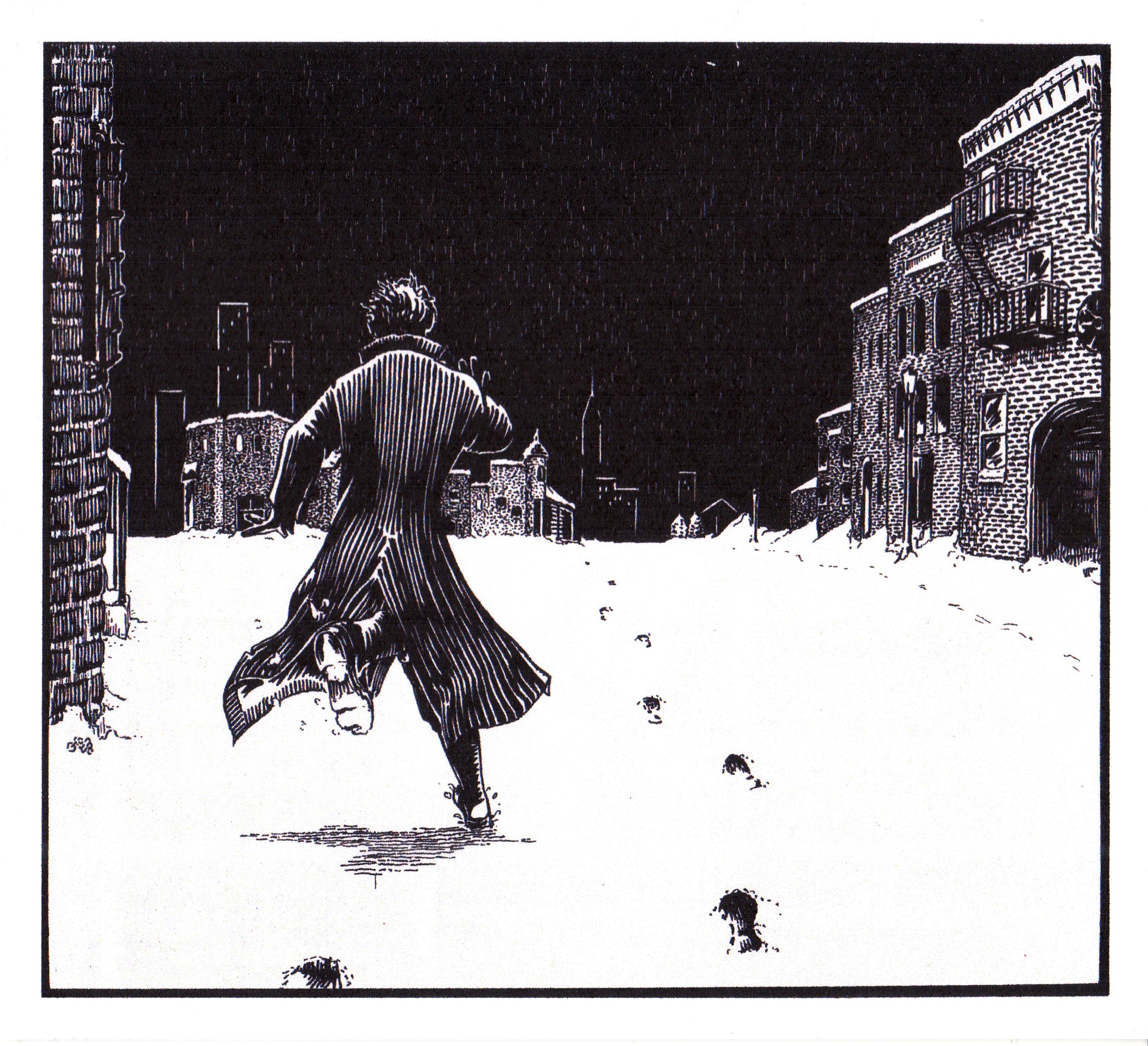
Pennies (1997). Oil on Canvas. From my book, Opening Acts and Other Stories, available at Amazon Books. Artwork and text copyright Danny Grosso.
Excerpt: The wind had picked up some dust and pushed it into the street. Cities were a lot closer to wide open lands back then, and one could look down the grid and perceive the emptiness at its end. The sudden gust had nearly knocked her cap off its tilt, so as she half walked, half wandered across, she delicately held it onto her head. Then it was gone – the wind, that is, along with that other thing. Oh God.
During those times, a carpet bag full of pennies could mean a month’s worth of groceries. And she’d lost it. The bag, and all those pennies – taken in by a gutter scammer.
The boy seemed to be really hurt, twisted as he was along the curb. She’d only bent down for a moment to try to soothe him, when she realized the bag she’d placed beside her was gone, and now the boy was gone as well, running into an alley, no longer hurt.
She’d been the penny peddler for almost a year now, selling all kinds of thigs for the copper coin, a flower, a piece of verse, a knitted tea cozy. Sometimes she would be engaged to read to an elderly shut in, or for help with an errand. Often she would work door to door, showing her basket of items, and if no interest was elicited, she’d quickly and humbly inquire if there was any chore she might assist with for a penny. She had some regulars but no contracts, some aspirations but no plans. And now she had no money.
The amount of pennies she had accumulated would have represented an almost vulgar amount of riches had pennies been worth more than, well, pennies. She’d reached both hands into the bag many times to gather to coins, and feel the weight of them. She reveled at the feeling of running them through her fingers. She loved the sound of them hitting each other as they landed back into their nest. She adored the saturated copper color of them, all together cradled by the textured sides of the bag. That bag.
The bag was the last thing she had of her mother’s, and as the time slowly passed on the walk home to fetch her basket of saleables, she realized that the crime had been a double theft. Her mother had died a painful death, she was told, for she had been kept away from the rented room they lived in for much of the horrible end. She was taken in by an unmarried Aunt, who died some years later, during a tragic stillbirth. Such were the travails of being a woman in that age. The bag, supposedly once a gift from an old suitor, first filled with her playthings, and them repurposed as a bank bag, had soldiered on with her. Now she was alone, without the last remnant of her past to anchor her to a place, a time, a family.
They say that crimes like this often have unintended consequences and that thefts often provide the victim, with circumstances that are impossible to fathom, with great riches over the fullness of time. Our girl could not think of such things, alone there, sleepwalking on the sidewalk. She was bereft and lightheaded, devastated by the losses of the day. But she would get her basket and she would hit the streets for the evening passers by. It was payday, that’s why she was out with the bag so early in the afternoon, on her way to the bank to exchange the coins for bills before the rush. She spied a few perfect daisies just next to her in a prairie lot. She plucked them from their bed to add to her basket.
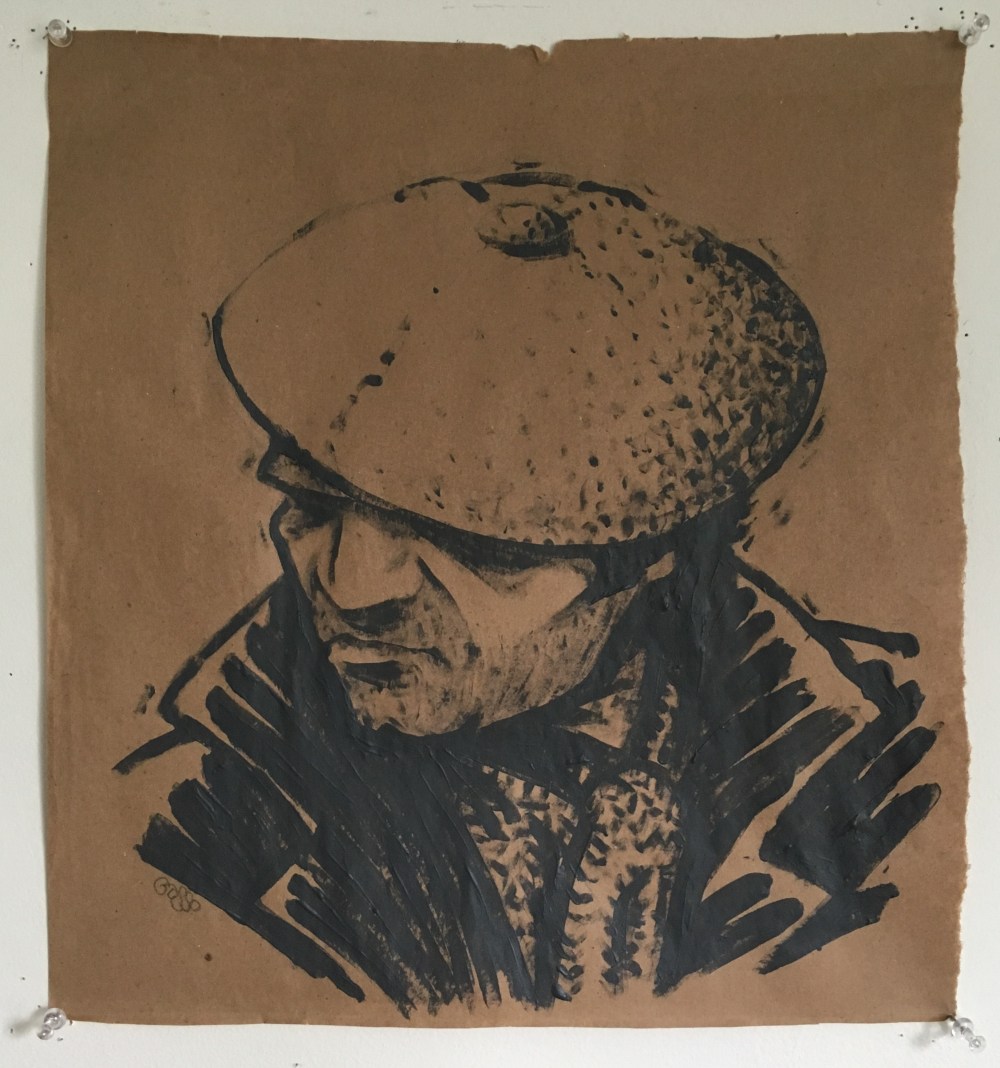
The Wounds of Friendship (2023). Oil on Wood. From my book Trouble is Trouble, available at Amazon Books. Artwork and text copyright Danny Grosso.
Excerpt: “Like him?” he would start, “Why I like him so much it hurts.” He meant it of course, all of it, the “like” part and the “hurts” part. He grew up in a place where you give up your friends dearly, only as a last resort. Lives depended on friendships, on discretion, on fealty, and for that reason these bonds were cultivated from an early age. The older guys would introduce their sons and nephews to the other guys’ kids, so that by adolescence, everyone was spun together in a web of relationships that perpetuated the status quo. That web would tense with outside pressures from money and wives and and really anything from outside of the group, and sometimes strands would break with violence, leaving suspicion as a remainder. Eventually, the web of friendships would become one of betrayal and deceit that seemed inescapable.
Still, most soldiered on, as most did not know any better, they had few relations outside of the group. With age came wizened faces, and to those who knew how to look, the battle scars of friendship. “In this life, it’s not easy to stay friends. Everybody has to watch out for his own.” He would say that even while he was sitting next to Corky or Slugs, whom he’d know since the second grade. As children, they’d inflicted little tragedies upon each other. As adults, dangerous betrayals. Yet for a lot of them, the ties remained, and were often cultivated anew, after the detritus of the past was swept into a lump under a rug – still obvious, but also, important evidence that effort was made, like a memorial to fallen soldiers.
It was hard for some not to see their wounds as grotesque, their stubborn friendships as masochistic and ridiculous. “I know we are so different, and we don’t see eye to eye anymore but there’s somethin’ I still like about him,” he would say. And even through a blackening, closed eye and bloodied lip he seemed genuine in his feelings.